The Question Every Project Manager Faces
You’re standing on the shop floor, blueprint in hand, facing a critical decision: TIG or MIG welding for your dissimilar metal joints? It’s not just a technical choice—it’s one that will impact your project’s strength, timeline, and bottom line.
We’ve been there. And after years of fabricating everything from precision aerospace components to heavy industrial structures, we’ve learned that the answer isn’t always straightforward. Let’s walk through this together.
Why This Matters More Than Ever in 2026
The welding industry is experiencing remarkable growth—the global market is projected to reach $34.18 billion by 2030. But here’s what’s really interesting: while automation and robotics are transforming the landscape, the fundamental choice between TIG and MIG remains as critical as ever.
Why? Because MIG welding remains the most widely requested skill in manufacturing, fabrication, and construction, while TIG welding is highly sought-after in aerospace, shipbuilding, and precision industries.
The Real-World Difference: It’s Not Just About Speed
TIG Welding: The Precision Artist
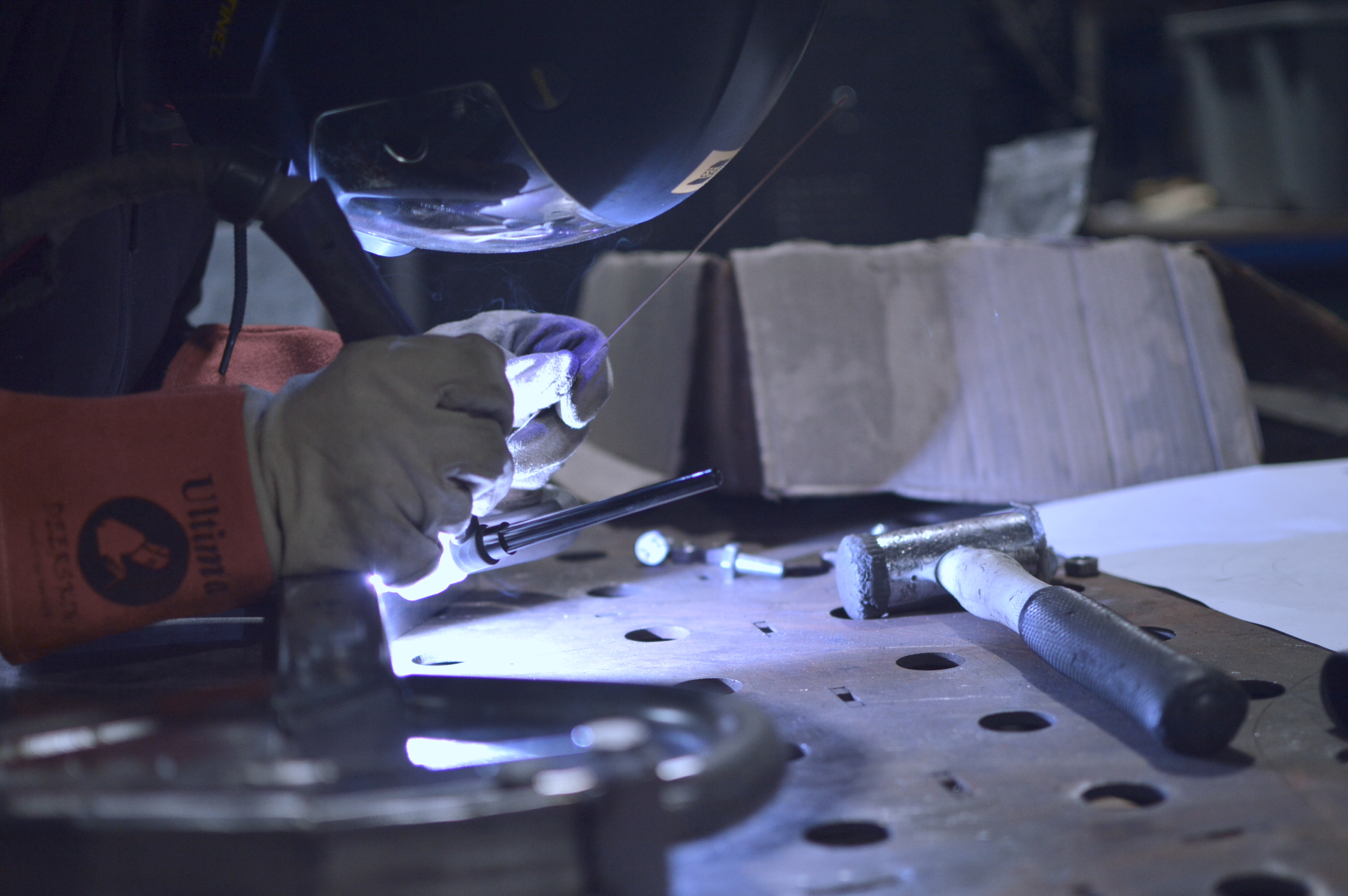
Think of TIG (Tungsten Inert Gas) welding as the surgeon of the welding world. Using a non-consumable tungsten electrode, it delivers controlled, lower heat input that creates exceptionally clean, precise welds.
What we’ve found through extensive testing:
- Superior tensile strength: In our comparative studies, TIG-welded joints of type 304 stainless steel achieved ultimate tensile strengths up to 621 MPa—consistently outperforming MIG by 12-15%
- Cleaner microstructure: Finer, more homogeneous grain structure with minimal carbide precipitation
- Aesthetic excellence: Smooth, professional-looking weld beads with minimal spatter
- Versatility: Effective on materials from 0.5mm upwards, including specialty alloys
The trade-off? Time. TIG welding is slower, with lower deposition rates. It’s not your choice for high-volume production runs—but when precision and structural integrity are non-negotiable, it’s unmatched.
MIG Welding: The Production Powerhouse
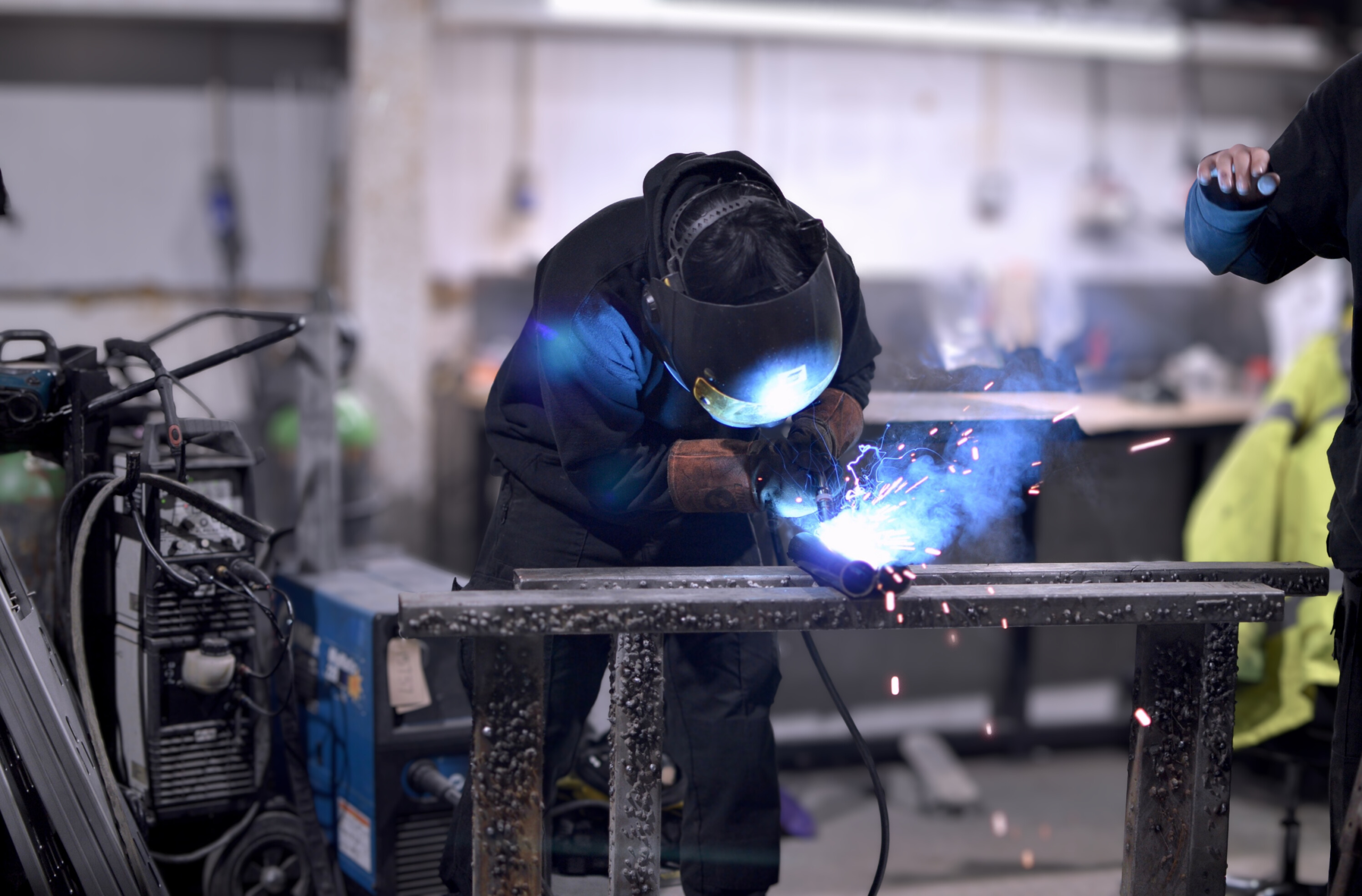
MIG (Metal Inert Gas) welding uses a consumable wire electrode that feeds continuously through the welding gun. It’s fast, efficient, and highly productive.
Where MIG shines:
- Speed and efficiency: Significantly faster deposition rates make it ideal for large-scale fabrication
- Deeper penetration: Excellent for thicker materials and single-pass welding
- Cost-effectiveness: Lower overall project costs for high-volume work
- Automation-friendly: Easier to integrate with robotic systems for consistent quality
The consideration? MIG requires more careful parameter control. Higher heat input can lead to coarser microstructures and increased risk of distortion if not properly managed.
The Dissimilar Metals Challenge
Here’s where things get interesting. When you’re joining dissimilar metals—say, low-carbon steel to 316 stainless steel—the stakes get higher.
Why dissimilar metal welding is tricky:
- Different melting temperatures
- Varying thermal expansion coefficients
- Risk of brittle intermetallic phase formation
- Potential for element migration and segregation
Our research and field experience consistently show that TIG welding has the edge here. The lower heat input minimizes dilution and reduces the formation of brittle phases at the interface. We’ve observed smoother transition zones and fewer porosity issues compared to MIG welds.
But—and this is important—recent advances in pulsed MIG and synergic MIG systems have narrowed the performance gap, providing smoother arc stability and controlled heat input.
What the Data Really Tells Us
Let’s get into the specifics. In controlled testing of type-304 austenitic stainless steel:
TIG Welding Results:
- Highest UTS: 621 MPa (at 170A current)
- Yield strength: Up to 400 MPa
- Microstructure: Fine, balanced grain structure
- Defects: Minimal spatter, low porosity
MIG Welding Results:
- UTS range: 517-568 MPa
- Notable feature: Deeper penetration capability
- Microstructure: Coarser grains with δ-ferrite formation near fusion line
- Risk factor: More prone to incomplete fusion if parameters aren’t optimized
The Parameters That Actually Matter
Whether you choose TIG or MIG, success hinges on optimization. Here’s what moves the needle:
Critical Parameters:
- Welding current – The dominant factor affecting tensile strength and weld quality
- Voltage – Less influential than current, but critical for arc stability
- Travel speed – Directly impacts heat input and cooling rates
- Shielding gas flow – Essential for preventing oxidation and contamination
- Electrode feed rate (MIG) – Controls deposition and penetration
We use Taguchi design and response surface methodology to optimize these variables for each specific application. It’s not guesswork—it’s engineered precision.
Industry Trends Shaping Your Decision
The welding industry continues to evolve at an impressive pace, shaped by technological innovation, new materials, and smarter systems. Here’s what’s happening right now:
- Automation IntegrationRobotic welding systems are becoming more accessible, even for smaller operations. The global robotic welding market is expected to grow to $10 billion by 2026, driven by demands for consistency and efficiency.
- Smart Welding TechnologyIoT sensors and real-time monitoring systems enable machines to provide feedback during operations, supporting predictive maintenance and tighter process control.
- Hybrid ApproachesTIG-MIG hybrid welding is emerging as a practical solution that combines TIG’s precision with MIG’s productivity—achieving both quality and speed.
- Advanced MIG VariantsTechnologies like SuperPulse and Cold Metal Transfer (CMT) are pushing MIG capabilities closer to TIG quality while maintaining production advantages.
So, Which Should You Choose?
Choose TIG when:
- Precision and weld quality are paramount
- Working with thin materials or specialty alloys
- Joining dissimilar metals in critical applications
- Aesthetic appearance matters (aerospace, medical devices, visible structural components)
- Project specifications require maximum tensile strength and ductility
Choose MIG when:
- High-volume production is the priority
- Working with thicker materials requiring deep penetration
- Cost and speed are driving factors
- Automation potential is important
- Applications can tolerate slightly lower ductility
Consider hybrid or advanced variants when:
- You need both quality and productivity
- Budget allows for newer technology investment
- Complex projects require flexibility
Our Approach: It’s About Partnership
Here’s what we’ve learned after thousands of fabrication projects: the best welding process isn’t determined by technology alone—it’s determined by your specific requirements.
That’s why our process starts with understanding your needs:
- What are your strength requirements?
- What’s your timeline?
- What’s your budget?
- What are the service conditions?
- Are there regulatory or certification requirements?
Based on these factors, we recommend the optimal process—or sometimes a combination. We’re not selling you a welding method; we’re engineering a solution.
The Bottom Line
Both TIG and MIG welding have earned their places in modern fabrication. TIG delivers unmatched precision and quality, while MIG provides speed and cost-effectiveness.
The key is knowing when to deploy each—and having the expertise to execute flawlessly.
In our experience, the most successful projects aren’t the ones that blindly follow industry trends or choose based solely on cost. They’re the ones where the welding process is carefully matched to the application, with parameters optimized through systematic testing and real-world experience.
What’s Next for Your Project?
If you’re facing a critical welding decision—whether it’s joining dissimilar metals, meeting tight tolerances, or optimizing for production efficiency—we’re here to help.
Our team combines academic research, advanced testing methodologies, and decades of shop floor experience. We don’t just weld metal—we engineer joints that perform.
Questions we can help you answer:
- Which welding process will deliver the strength you need?
- How can we optimize parameters for your specific materials?
- What’s the most cost-effective approach for your volume?
- How do we ensure consistency across production runs?
Let’s start a conversation about your next fabrication project. Because in welding, as in life, the details matter—and getting them right makes all the difference.
Want to dive deeper into welding optimization for your specific application? Contact our engineering team for a technical consultation. We’ll review your specifications, materials, and requirements to recommend the optimal approach for your project.
References:
- Ogundimu, E.O., et al. (2019). Comparative Study between TIG and MIG Welding Processes. Journal of Physics: Conference Series.
- Shuya, T., Ramadan, N., & Ahmed, S.A. (2025). Comparative Study Between TIG and MIG Welding Process. International Journal of Engineering Research and Development.
- Industry market research and trends (2025-2026)